China’s Shipyards Shift Toward AI-Driven Cruise Ship Building
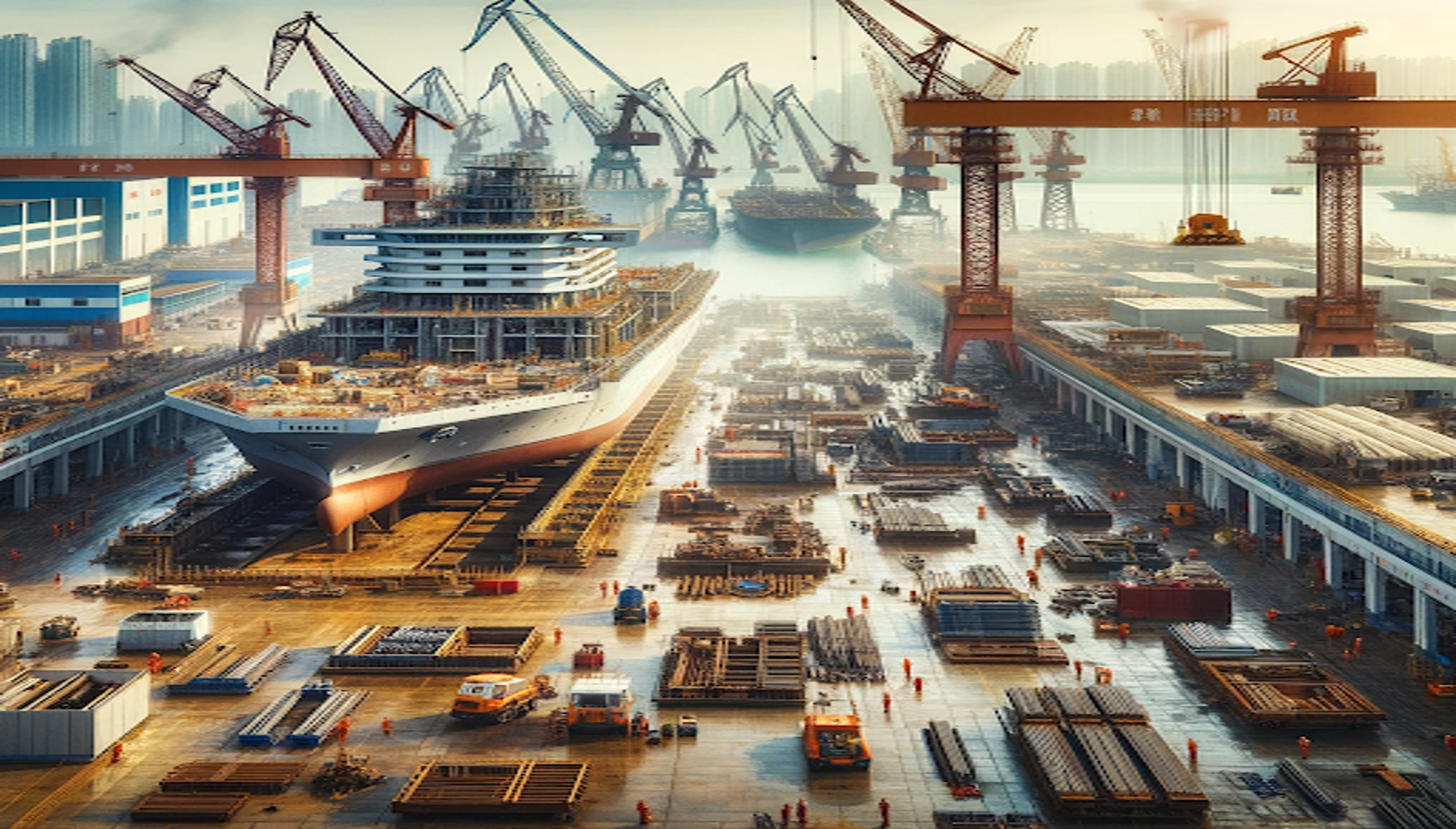
China’s shipbuilding sector is moving into a new phase shaped by faster production, advanced automation, and the growing use of artificial intelligence. A recent report notes that the country has continued to rank among the world’s top shipbuilding nations while rapidly adopting intelligent manufacturing practices.
A major focus of this evolution is China’s expanding cruise ship program, where digital tools are increasingly influencing how large passenger vessels are designed and assembled.
At a major shipyard operated by Shanghai Shipbuilding Group, work on China’s second domestically built large cruise ship, Adora Flora City, has now surpassed 91 percent completion.
Compared with China’s first homebuilt cruise ship, the build schedule for the new vessel has been reduced by roughly eight months. In an industry known for long timelines and frequent delays, this represents a notable step forward and reflects a broader change in how shipyards are being run.
In a warehouse located near the shipyard, interior equipment such as cabin panels and furniture parts arrives daily. After unloading, automated conveyor systems and robots quickly sort and store the materials, completing the process in under four minutes.
Engineers attribute this efficiency to what they call an “artificially intelligent brain.”
This digital platform is able to:
Track incoming supplies
Assign storage locations
Plan production schedules
Coordinate deliveries to workshops
Adjust workflows instantly as conditions change
Compared with older planning methods, AI-based scheduling has boosted productivity in workshops by about 25 percent.
The result is a highly coordinated production environment, where materials, labor, and machinery operate in near-continuous motion with minimal wasted time.
Traditionally, managing this level of complexity has been a strength of European shipbuilders. China is now using artificial intelligence to narrow that competitive gap.
China’s cruise ship development is closely tied to its broader shipbuilding ambitions under China State Shipbuilding Corporation, the world’s largest shipbuilding group.
The report suggests that China’s continued success is no longer driven only by scale and workforce size, but increasingly by automation, data integration, and intelligent manufacturing systems.