Asia’s Top Container Ports Hold Rankings Heading Into 2026
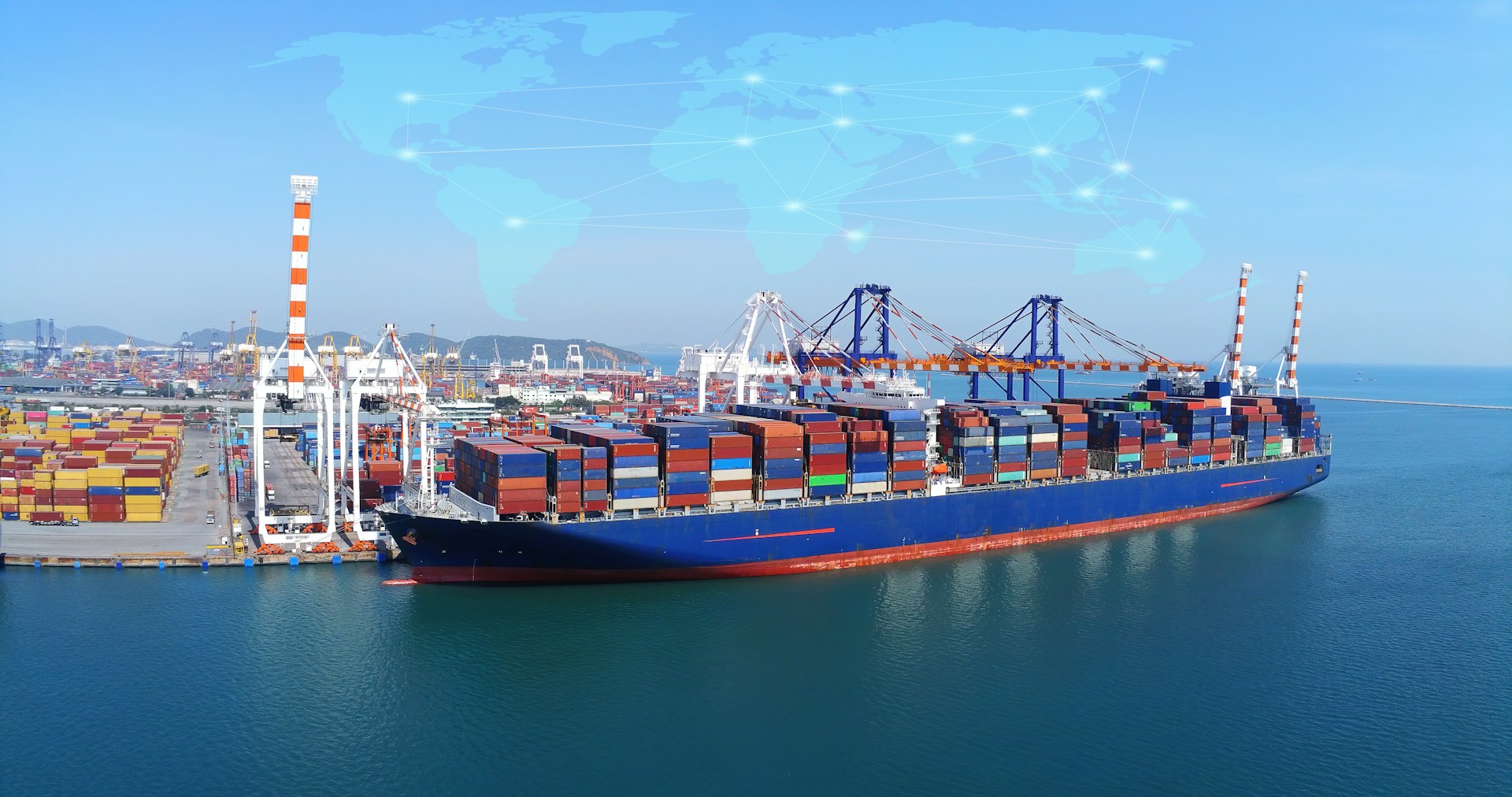
The global container port rankings remain unchanged as we head into 2026 , with Asia’s three leading hubs all reporting higher volumes in 2025 despite more challenging global trade conditions.
Shanghai International Port Group (SIPG) announced record container throughput of 55.06 million teu for 2025, representing a 6.9 percent increase compared to the previous year. The performance allows Shanghai to maintain its position as the world’s busiest container port for the 16th consecutive year.
SIPG noted that the year was marked by “complex and volatile global trade conditions” as well as “extreme weather events,” both of which posed operational challenges.
Holding second place, Singapore also posted a record year, handling 44.66 million teu in 2025, an 8.6 percent increase year on year.
“Amid shifting global trade patterns and evolving industry dynamics, effective coordination and connectivity across ports and supply chain nodes have never been more critical,” said Ong Kim Pong, group CEO of PSA International, Singapore’s main port operator.
Ningbo-Zhoushan retained third place on the container podium, processing 43 million teu during the year. The port remains the world’s largest overall by cargo volume, handling more than 1.4 billion tonnes in 2025.
Beyond pure throughput figures, additional performance measures are increasingly being used to assess container port competitiveness.
In November, DNV and Menon Economics named Singapore the world’s leading container port in the inaugural Leading Container Ports of the World (LCP) report, adding to a series of maritime hub distinctions awarded to the city-state in 2025. Shanghai and Ningbo-Zhoushan ranked second and third in that assessment.
The LCP report evaluates 160 ports using 35 indicators grouped into five categories: enablers, connectivity and customer value, productivity, sustainability, and overall impact. The metrics draw on objective data such as container volumes, berth productivity, emissions per teu, and the availability of alternative fuels.
By contrast, the fifth edition of the World Bank’s Container Port Performance Index (CPPI), released last September in partnership with S\&P Global, places greater emphasis on total vessel time spent in port. In that ranking, Shanghai placed first, while Singapore did not feature in the top ten.