Maersk and ONE Report Losses as Container Market Weakens
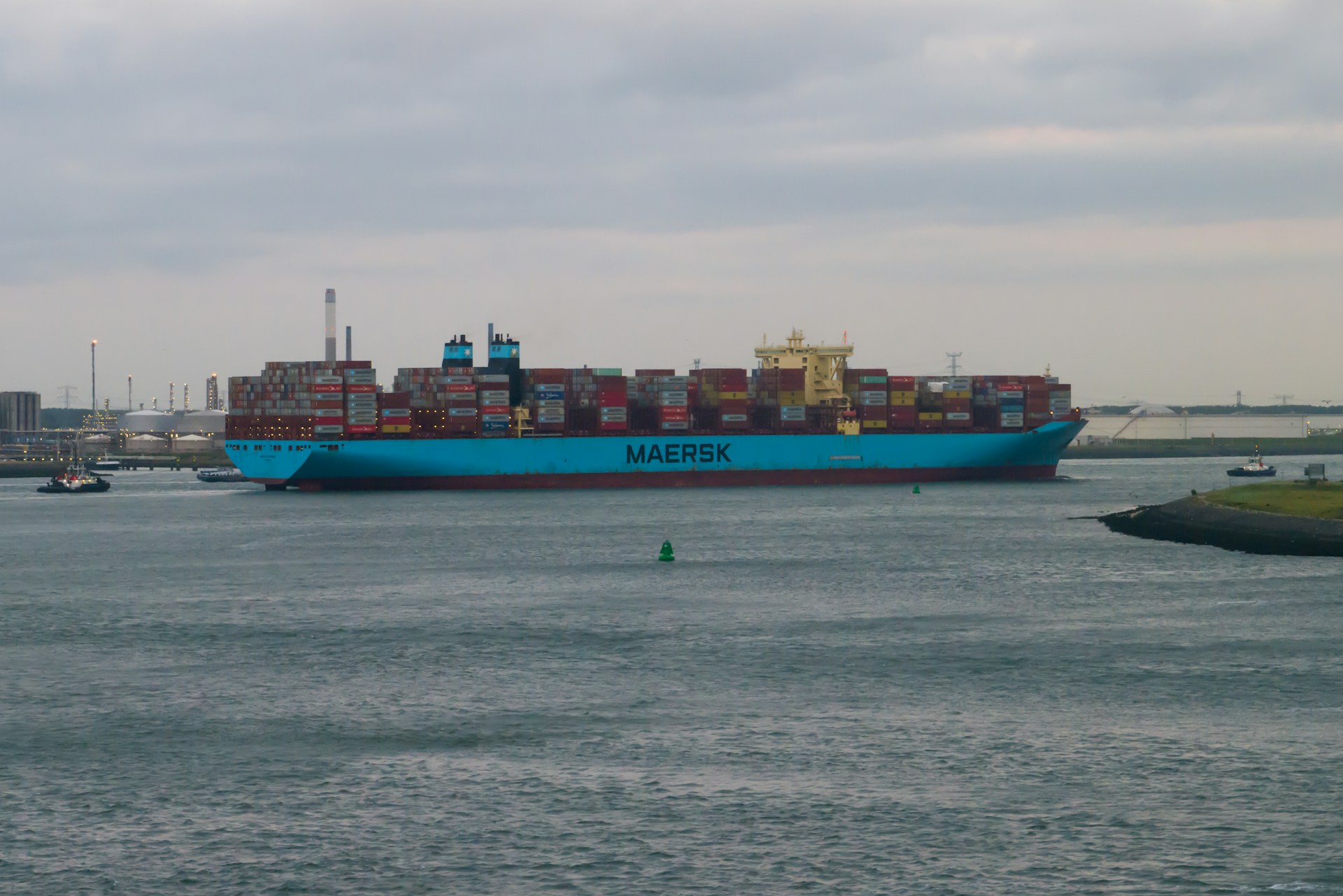
Pressure on the container shipping sector deepened yesterday after Maersk joined Japan’s Ocean Network Express in reporting losses in its ocean business for the final quarter of 2025.
The Danish carrier also announced plans to cut 1,000 jobs this year as major liner companies tighten spending in response to falling freight rates and worsening market conditions.
Maersk CEO Vincent Clerc acknowledged that 2025 had been a challenging year, noting that supply chains and global trade were still being reshaped by what he described as “evolving geopolitics”.
For the quarter, Maersk’s ocean division posted an EBIT loss of $153 million, compared with a profit of $567 million in the previous quarter and $1.6 billion in the fourth quarter of 2024.
The group also confirmed the launch of a DKK6.3 billion, or about $1 billion, share buyback program.
Concerns across the industry intensified last week when Ocean Network Express reported an operating loss of $84 million and a net loss of $88 million for the fourth quarter of 2025. ONE CEO Jeremy Nixon said the company was operating in a “challenging operating environment”.
Analysts at Linerlytica warned earlier this week that “Freight rates have continued to slip ahead of the Chinese New Year holidays and the carriers’ ability to stop the rate slump will continue to be tested in the coming months”.
According to container booking platform Freightos, the sector is entering a downturn. “Container freight is poised for a downcycle – putting downward pressure on rates and carrier revenue – as an unprecedented wave of new vessel capacity continues to enter the market,” the company said in a recent report.
Drewry’s 2026 Financial Health Check for liner shipping also cautioned that the industry is approaching a “structural reset” as freight rates normalize, pandemic-era profits fade, and a large volume of newbuild tonnage is delivered.
The consultancy urged carriers to move away from expansion-driven strategies and focus instead on stricter financial and operational management to prepare for what it sees as a more difficult, lower-margin period ahead.
U.S.-based consultancy AlixPartners echoed those concerns, advising liner companies to maintain strong capital discipline throughout the year.
“With freight rates reverting toward pre-Suez crisis lows and shippers pressuring liners to transition back to the Suez Canal, carriers must execute aggressively on cost-saving programs while managing capacity through slow-steaming and vessel idling,” the firm said. It added that while carriers’ balance sheets remain solid, discipline is essential to avoid repeating past boom-and-bust cycles.
Industry performance this year will largely depend on how quickly shipping lines resume regular transits through the Suez Canal.
Data from freight rate platform Xeneta suggests that a broad return to the Suez Canal would effectively release between 6 percent and 8 percent of global container shipping capacity by shortening sailing distances.
Maersk’s outlook for 2026 reflects this uncertainty. The company has forecast full-year group EBIT ranging from a $1.5 billion loss to a $1 billion profit, depending largely on when normal Red Sea transits resume.
“The ranges reflect the expected overcapacity in the shipping industry and scenarios of a gradual Red Sea reopening in 2026,” Maersk said.